A bowl of peaches on the counter is late summer at its most seductive. Then you look away for a day and every one of them is soft enough to bruise under its own weight. The answer is a small handoff: let firm peaches ripen in the room, then move the ready ones to the fridge.
It’s an easy rhythm, and it gives you a few more breakfasts before the fruit tips from lush to tired. You’re looking for fragrance, a golden background color, and a gentle give under your palm. Save the squeeze for a stress ball.
Let the counter finish what the orchard started
Firm peaches need warmth and time. Set them shoulder to shoulder on a plate, stem side down, where you’ll remember to check them. Utah State University Extension recommends a loosely closed brown paper bag when you want to encourage ripening, with a daily check so the fruit doesn’t race past you. Two or three days is a reasonable window, though a nearly ready peach may need only one night.
Color tells you more than blush. Look past the rosy side and find the background shade near the stem: creamy yellow is promising, green means patience. Then lift the peach into your palm and press with the flat of a finger. A ripe one yields slightly and smells unmistakably peachy. Fingertips leave little moons in delicate fruit, so keep the touch light.
The fridge buys you the good days
Once a peach reaches that fragrant, yielding stage, refrigeration slows the rush. Utah State suggests using ripe refrigerated peaches within three to five days. Put them in a loose bag or a produce drawer where they won’t be crushed by a cantaloupe, and keep the very soft ones at the front. This is less a filing system than a promise that tomorrow’s peach won’t become compost overnight.
Cold fruit can taste muted straight from the drawer. Take out what you plan to eat while you make coffee or toast, and let it lose the refrigerator chill. Ten or fifteen minutes on the counter brings the perfume forward and softens the texture. UC Davis’s postharvest guidance also makes the larger point clear: temperature strongly affects peach life after harvest. Timing earns you better fruit.
Wash it when you’re ready to cut
Rinse the peach under running water just before you eat it, then dry it with a clean towel. The FDA advises washing produce even when you won’t eat the peel, because a knife can carry what’s on the surface into the flesh. Skip soap and produce wash. Cool water and a gentle rub are enough, and the fuzz disappears beneath your fingers faster than you’d think.
Cut peaches belong back in the refrigerator within two hours, or within one hour if they’ve been sitting in heat above 90°F. Cover the slices so they don’t dry out or collect the flavors of everything else in the fridge. If you’re packing them for the park, a small cold pack is more charming than discovering warm, slippery fruit at the bottom of your tote.
Make the ripe one the whole point
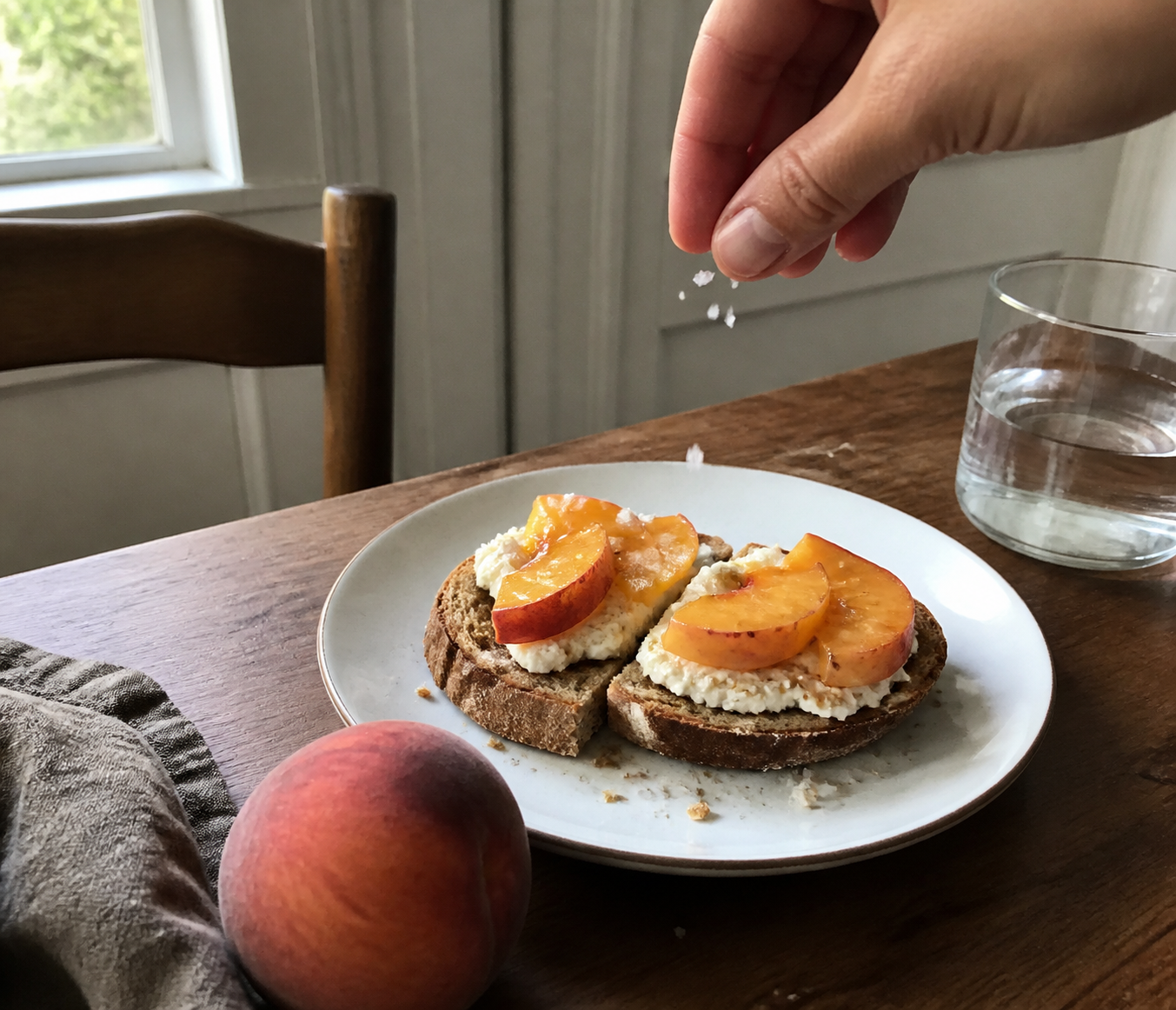
A perfect peach doesn’t need a recipe with twelve ingredients. Spoon ricotta or thick yogurt onto toast, add slices, then finish with flaky salt and black pepper. For dessert, tuck wedges beside vanilla ice cream and let the juice make its own sauce. A squeeze of lemon sharpens a peach that’s sweet but slightly sleepy; a few basil leaves make the plate look as lovely as it tastes.
Keep one peach whole for the sink, eaten with both hands while the juice runs. That’s the pleasure you’re protecting with all this counter-to-fridge choreography. Buy a few at different stages, check them once a day, and chill each one as it becomes ready. Late summer lasts a little longer when the fruit waits for you.