A long, steamy shower can feel like the loveliest part of the evening. Then comes the small betrayal: ten minutes later, your shins feel tight and your shoulders have lost that soft, just-bathed finish.
The water hasn't somehow failed to reach your skin. It reached it, and then it started leaving. What you do in those first few minutes can make the difference between comfortable skin and the familiar search for body cream after you're already dressed.
Your skin gets wet, then the water moves on
The outermost layer of skin takes up water during a bath or shower, which explains that briefly plump, softened feeling. In a 2021 experiment, researchers measured the forearms of 78 healthy volunteers before and after three minutes of showering or immersion. Skin hydration rose immediately with both methods, then fell quickly; it was back to baseline within ten minutes.
At the same time, transepidermal water loss, or TEWL, increased after bathing. TEWL is the quiet movement of water from inside the skin into the air. The study gives us a revealing snapshot of the minutes after you turn off the tap: surface hydration is temporary, and evaporation is already underway. It doesn't tell us that showering is bad, or that one bath will damage healthy skin.
Heat and time can tip comfort into tightness
That study compared showering with immersion; it didn't compare water temperatures. For the heat question, the American Academy of Dermatology's advice is refreshingly direct: use warm rather than hot water and keep baths or showers to about five to ten minutes. Long, hot showers can strip some of the oils and fats that help the skin hold onto water.
You don't need to turn a pleasurable shower into a chilly endurance test. Aim for comfortably warm water, especially on days when your skin already feels dry, itchy, or reactive. Cleanse where you need it rather than covering every inch in a mountain of lather, and pat with a towel instead of rubbing until your skin squeaks.
Catch the damp-skin window
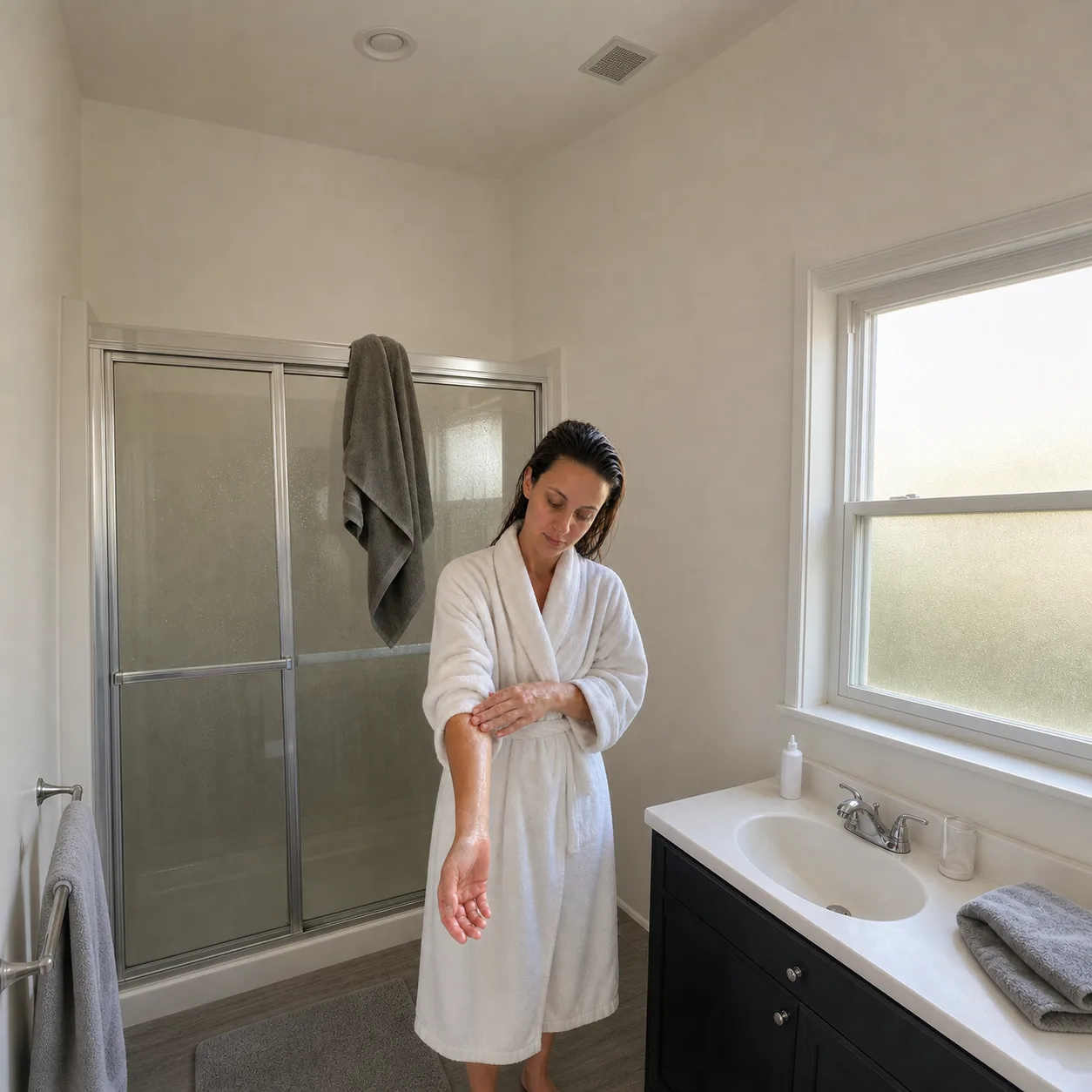
Once you're out, leave your skin faintly damp and apply moisturizer straight away. The AAD recommends moisturizing while skin is still damp because the product helps hold that water in. Think soft sheen, not rivulets: a quick, gentle pat with the towel is enough before you smooth cream over arms, legs, and anywhere that tends to feel tight.
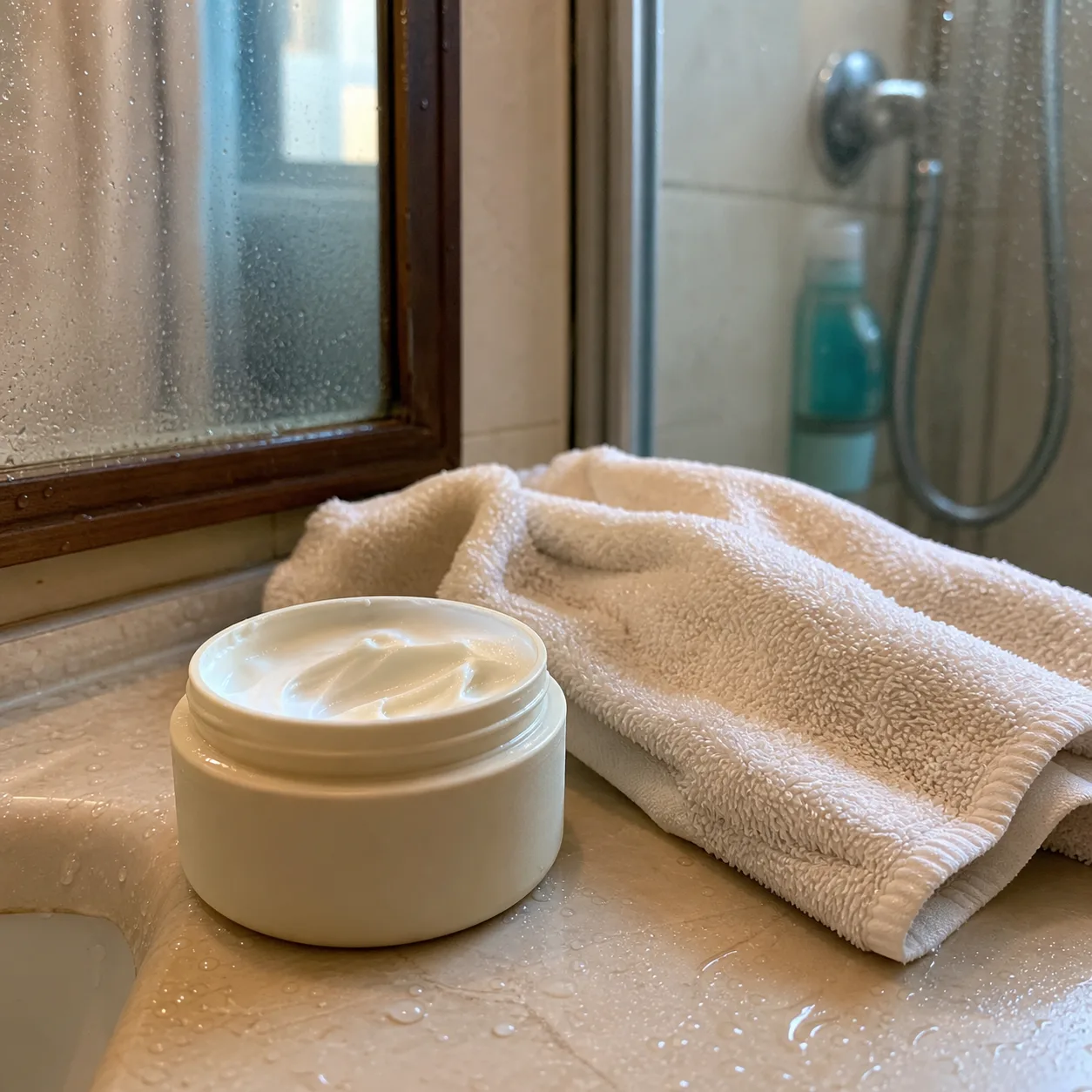
For dry skin, a cream or ointment generally holds water better than a thin lotion. Fragrance-free is the calmer choice when skin is sensitive. You don't need a special post-shower formula or a crowded shelf; you need a texture you'll spread generously before the bathroom mirror has cleared.
Let your skin decide how rich to go
A light lotion may feel perfect in humid weather or on areas that never get dry. Colder air, indoor heating, frequent bathing, eczema, and mature skin can call for something richer. If a cream disappears and your skin still feels tight by bedtime, move up to an ointment on the driest patches rather than adding three more scented layers.
Persistent itching, cracking, bleeding, or a rash deserves a dermatologist's attention. For everyday dryness, the winning rhythm is almost modest: a shorter warm shower, a gentle towel pat, and moisturizer before the last beads of water vanish. Keep the steam if you love it, just don't let it set the temperature or the clock.