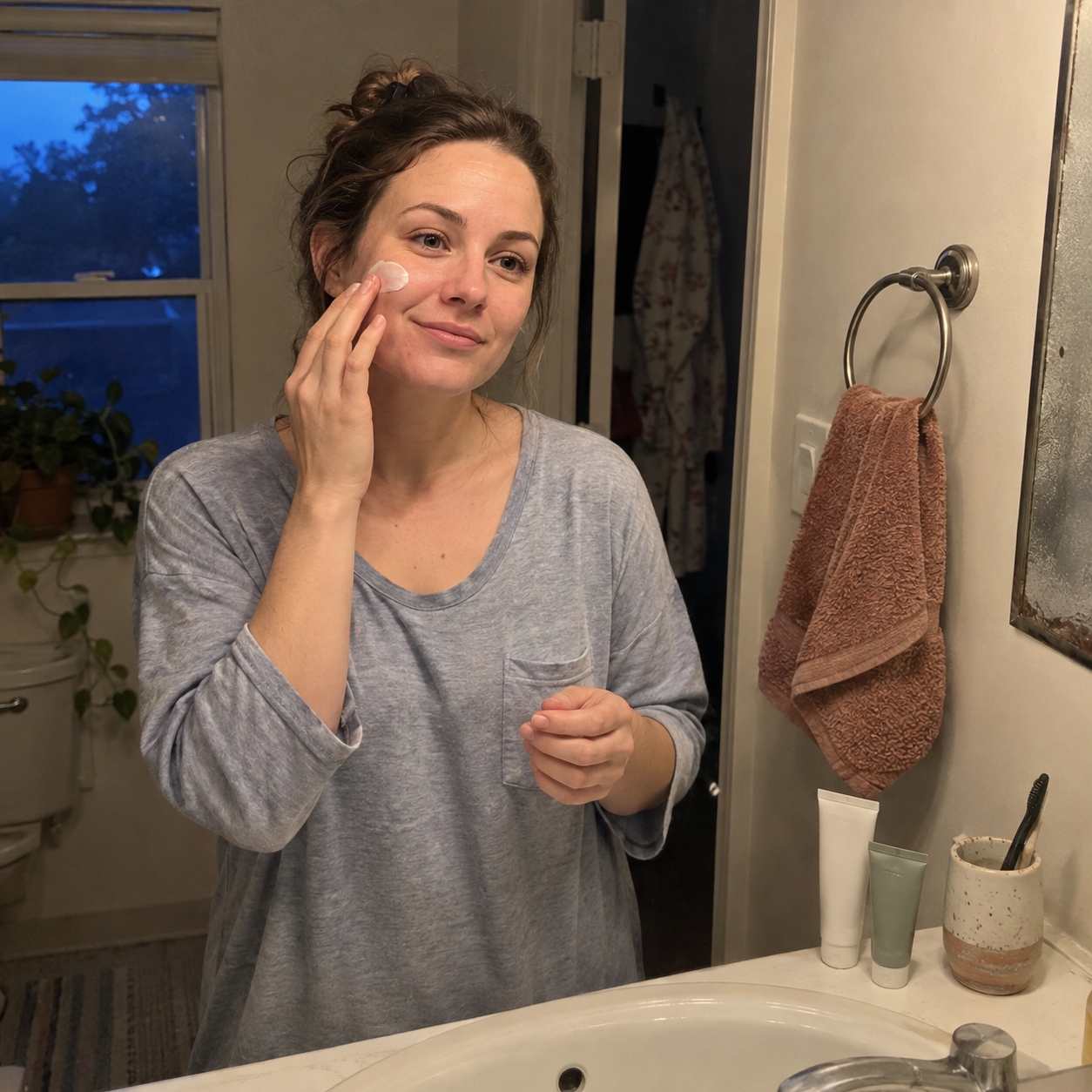
Retinoid season tends to arrive with the first cool evening. You pull the little tube back to the front of the cabinet, picture brighter skin by November, and wake up three nights later with a chin that stings when water touches it.
Peeling isn't proof that the product is working harder. It's your cue to make the routine quieter. Retinoids reward consistency, and consistency is much easier when your face feels comfortable.
Read the flaking as a message
Retinoids are a family that includes over-the-counter retinol and prescription treatments such as tretinoin and adapalene. They can help with mild acne, uneven tone, pigmentation, and fine lines, according to the American Academy of Dermatology. Dryness, redness, burning, and peeling are also familiar side effects. More product won't hurry the result; an FDA label for topical tretinoin specifically warns that extra applications can bring more discomfort without faster improvement.
Pay particular attention if irritation tends to leave a dark mark behind. The AAD notes that inflamed skin can trigger hyperpigmentation in deeper skin tones. Persistent swelling, blistering, pain, or a rash deserves a pause and a conversation with a dermatologist. If you're pregnant or planning a pregnancy, skip retinoids and ask your clinician for another option.
Let moisturizer soften the evening
The internet calls it buffering or the retinoid sandwich: moisturizer before, retinoid next, sometimes another veil of cream on top. The memorable name is trendier than the underlying advice. Dermatologists may recommend applying moisturizer first when a retinoid is irritating, and daily moisturizer can help skin tolerate drying acne treatments.
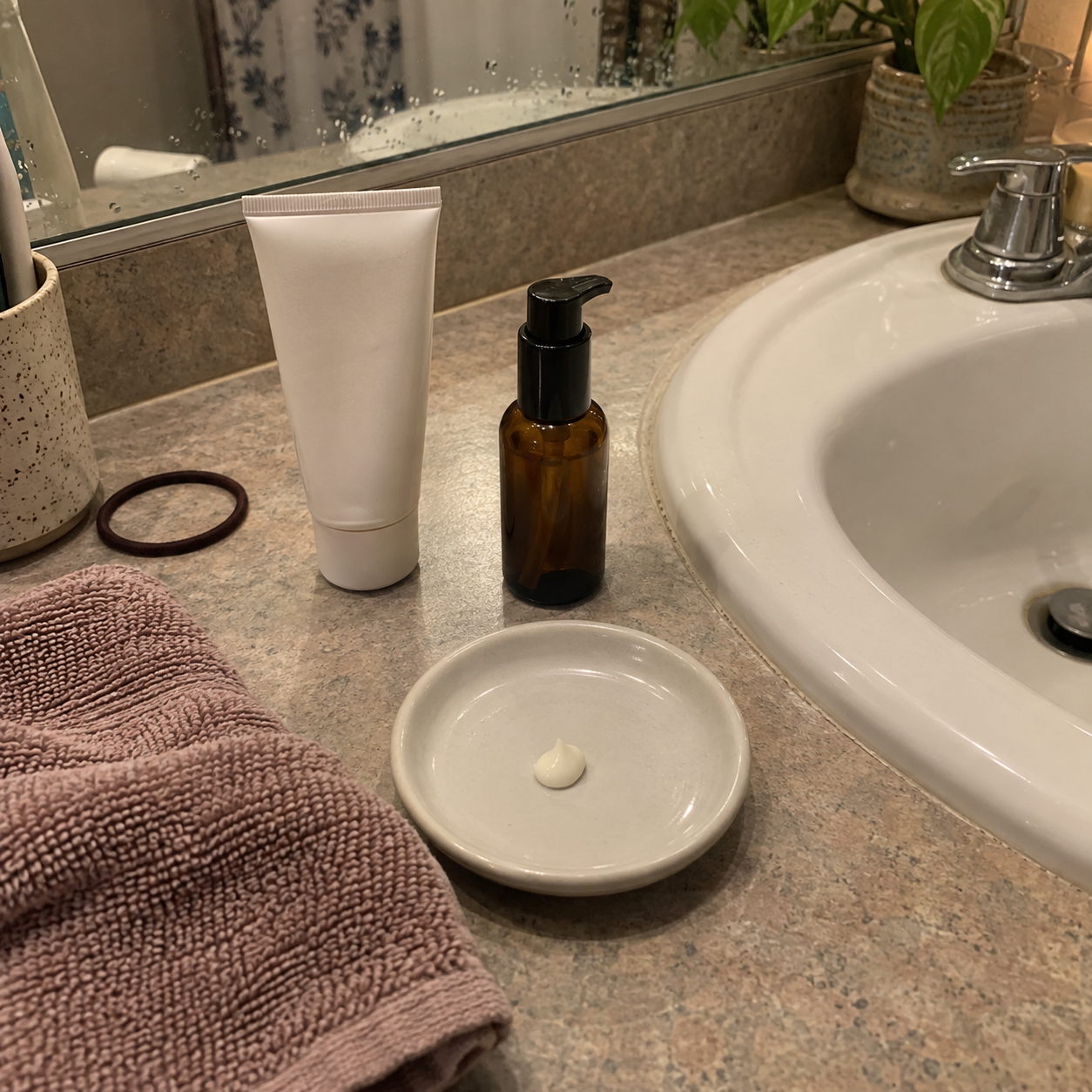
Start with a gentle cleanse, pat dry, then smooth on a plain moisturizer that already agrees with your skin. Give it a moment to settle before adding your retinoid. Fragrance, exfoliating acids, and an impressive shelf of serums can wait for another night. Your aim is a face that feels uneventful when it meets the pillow.
Use less, and use it less often
A thin layer is enough. For prescription tretinoin, follow the directions you were given rather than borrowing someone else's pea-size rule from social media. The AAD says a dermatologist may respond to irritation by reducing the amount, spacing applications farther apart, or putting moisturizer first. Those changes are worth discussing when the treatment is prescribed.
With an over-the-counter retinol, choose a low-strength formula and begin every other night or more slowly if your skin needs it. Keep the rest of that evening deliberately dull. Scrubs and strong drying treatments can make an already touchy face feel raw; the FDA's tretinoin guidance also flags several acne ingredients as potential irritation partners.
Morning is part of retinoid night
Retinoids belong in the evening, followed by sun protection the next day. The AAD recommends broad-spectrum, water-resistant SPF 30 or higher for acne-prone skin, along with shade and protective clothing. Apply enough to cover exposed skin, including the easy-to-miss edges around your hairline and ears.
Cold wind and dry indoor heat can make irritation more noticeable, so the routine that felt easy in July may need editing now. Take a night off when your skin feels tender. Keep cleanser mild, let moisturizer do more, and bring the retinoid back at a pace your face can live with. Calm skin is the schedule you'll actually keep.