
You don't need a full class to change the tone of a day. Ten minutes is enough to loosen the places that hoard desk tension and give your attention somewhere quieter to land.
None of this is about nailing a pose. The research on yoga is modest and honest about its limits, but it keeps pointing the same way: practiced regularly, it can ease stress, improve flexibility and balance, and help you sleep. A short sequence you'll actually repeat beats an ambitious one you'll skip by Wednesday.
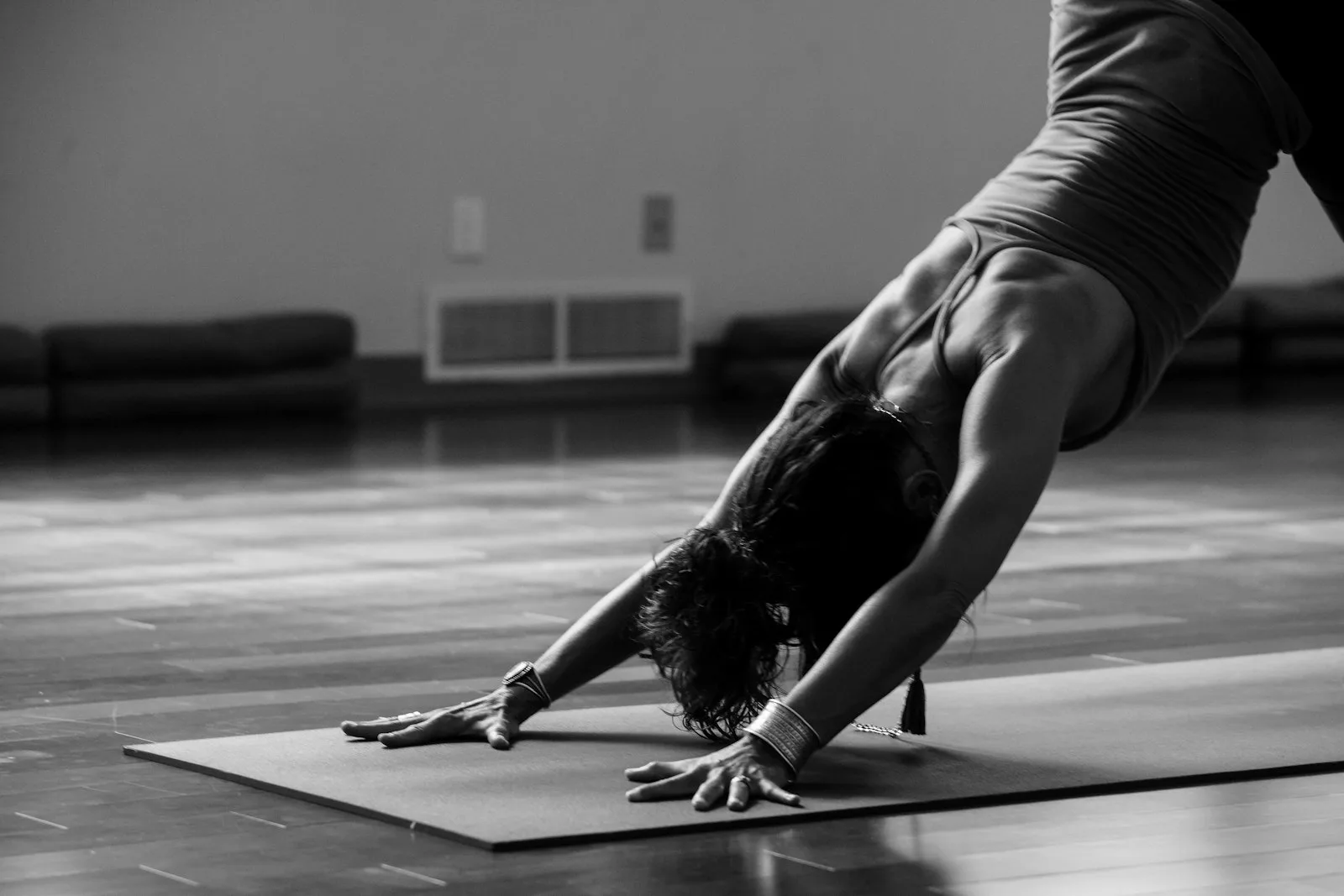
Move through it slowly
Work through child's pose, cat-cow, a low lunge on each side, a seated forward fold, a supine twist, and legs up the wall to finish. Stay five to eight breaths in each, and let the exhale run a little longer than the inhale.
None of this is a performance. If anything feels sharp, ease out or swap in a stretch that feels good. Yoga is safe for most healthy people as long as you move at your own pace and don't force a shape your body isn't offering.
Let the breath do the work
The stretching is only half of it. Slow, steady breathing is a big part of why ten minutes can leave you calmer than the clock says it should. Match the movement to your breath instead of rushing the shapes, and the whole thing stops feeling like exercise at all.
If your mind drifts to your inbox, that's normal. Notice it, come back to the breath, carry on. That returning is the practice.
Make it easy to come back to
Leave the mat where you can see it, keep the same playlist (or no sound at all), and stop before it starts to feel like one more thing you owe yourself.
Consistency is where the payoff lives, and the science agrees the benefits come from regular practice rather than the occasional heroic session. Ten unremarkable minutes most days will do more for you than one ambitious hour you dread.