There’s a particular point when your favourite blush starts looking dull and your foundation brush seems to move yesterday’s makeup around instead of blending today’s. Before you replace anything, take the brushes to the sink.
The whole wash can fit between taking off your jewellery and choosing something to watch. Ten unrushed minutes, one clean towel, and tomorrow’s makeup already has a better chance.
Read the colour left in the bristles
A brush keeps a quiet record of everything it has touched. Peach blush settles near the base, bronzer softens into foundation, and shimmer has a talent for turning up three days later. That leftover mix changes the shade you see on your face. It also makes the bristles feel stiff, so a soft sweep becomes a drag across the skin.
The American Academy of Dermatology recommends washing makeup brushes every seven to ten days. That’s a sensible rhythm for brushes you use constantly. Give sponges more attention: because a damp sponge meets your face again and again, wash it after each use and let it dry completely.
Keep the wash gentle and the handles dry
Run lukewarm water over the bristles with the brush pointing down. Keep the metal ferrule and handle out of the stream; soaking the whole head can loosen the glue inside. Add a small drop of gentle shampoo or brush cleanser to your palm, then swirl the tip lightly until the old colour begins to lift.
Rinse and repeat until the water runs clear. Resist scrubbing the brush against a textured mat as if you’re cleaning grout. Your palm and a little patience are enough. Press the bristles in a clean towel to remove excess water, then ease them back into their original shape with your fingers.
Give every brush room to dry
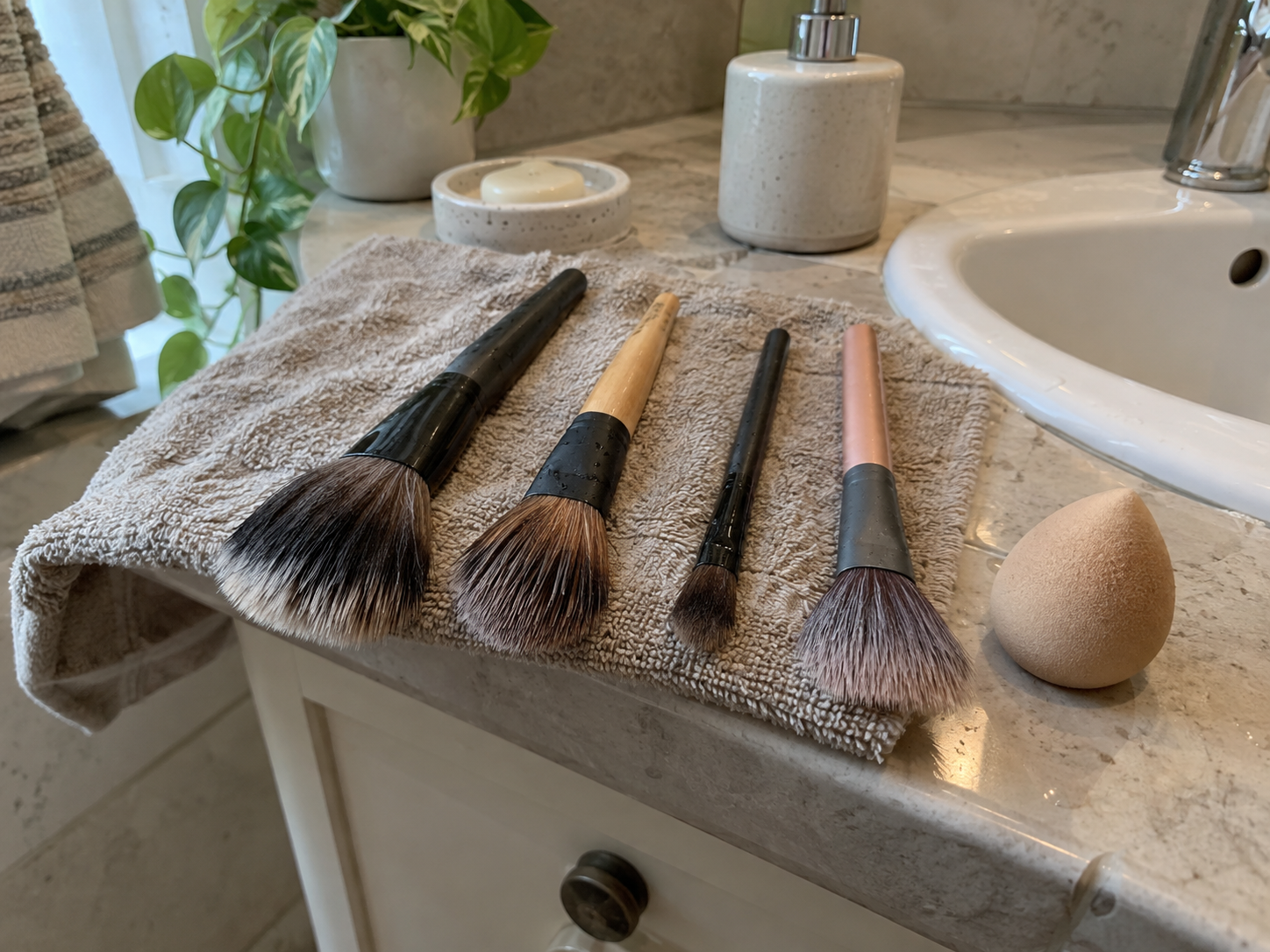
Lay the brushes flat on a towel with the bristles just beyond the edge of the counter. Air can move around the tips, while gravity keeps water from travelling into the handle. A cup looks tidier, but wet brushes standing upright send moisture exactly where you don’t want it.
Choose a place with air rather than heat. A radiator, hair dryer, or hard afternoon sun can be rough on bristles and handles. Wash at night and leave them alone until morning. If a dense foundation brush still feels cool or damp at the centre, let it have the extra hours instead of rushing it back into your makeup bag.
Make the next wash easy to remember
Keep the brushes you use every day separate from the ones you reach for once a month. A small weekly group is far less dramatic at the sink than an overstuffed jar. Clean the handles while you’re there, close your compacts, and wipe the place where the brushes usually sit.
The FDA also advises washing your hands before using cosmetics, keeping containers clean and closed, and skipping shared makeup. If a product changes colour or smell, or if makeup causes a rash or burning, stop using it. Brush night should feel pleasantly ordinary: a little suds, a clean towel, and soft bristles waiting for you in the morning.