There’s a particular kind of spot that can hijack your whole evening. You notice it while brushing your teeth, lean closer, and suddenly your fingers are conducting an inspection nobody asked for.
A pimple patch is very good at ending that conversation. The plain hydrocolloid kind gives a surfaced blemish a clean little roof, absorbs fluid, and makes casual picking harder. That’s enough to earn it a permanent place in the bathroom drawer.

Give it a spot it can actually handle
Hydrocolloid began as a wound-dressing material: it holds a moist environment and takes up fluid. On a pimple that has come to a visible head or has already opened on its own, that absorptive layer can turn cloudy as it collects moisture. One small randomized pilot found that hydrocolloid acne dressings improved redness, oiliness, and lesion size faster than skin tape over seven days. It’s encouraging evidence, though one study of 20 people doesn’t make the dots a cure-all.
The hard, sore bump you can feel under the skin is a different creature. There’s little at the surface for a plain patch to absorb, so covering it may stop you touching it but won’t reach the inflammation below. Blackheads are equally unimpressed. Save your dots for shallow, surfaced spots and let a deep or persistent breakout have proper acne care.
Clean, dry skin makes the seal
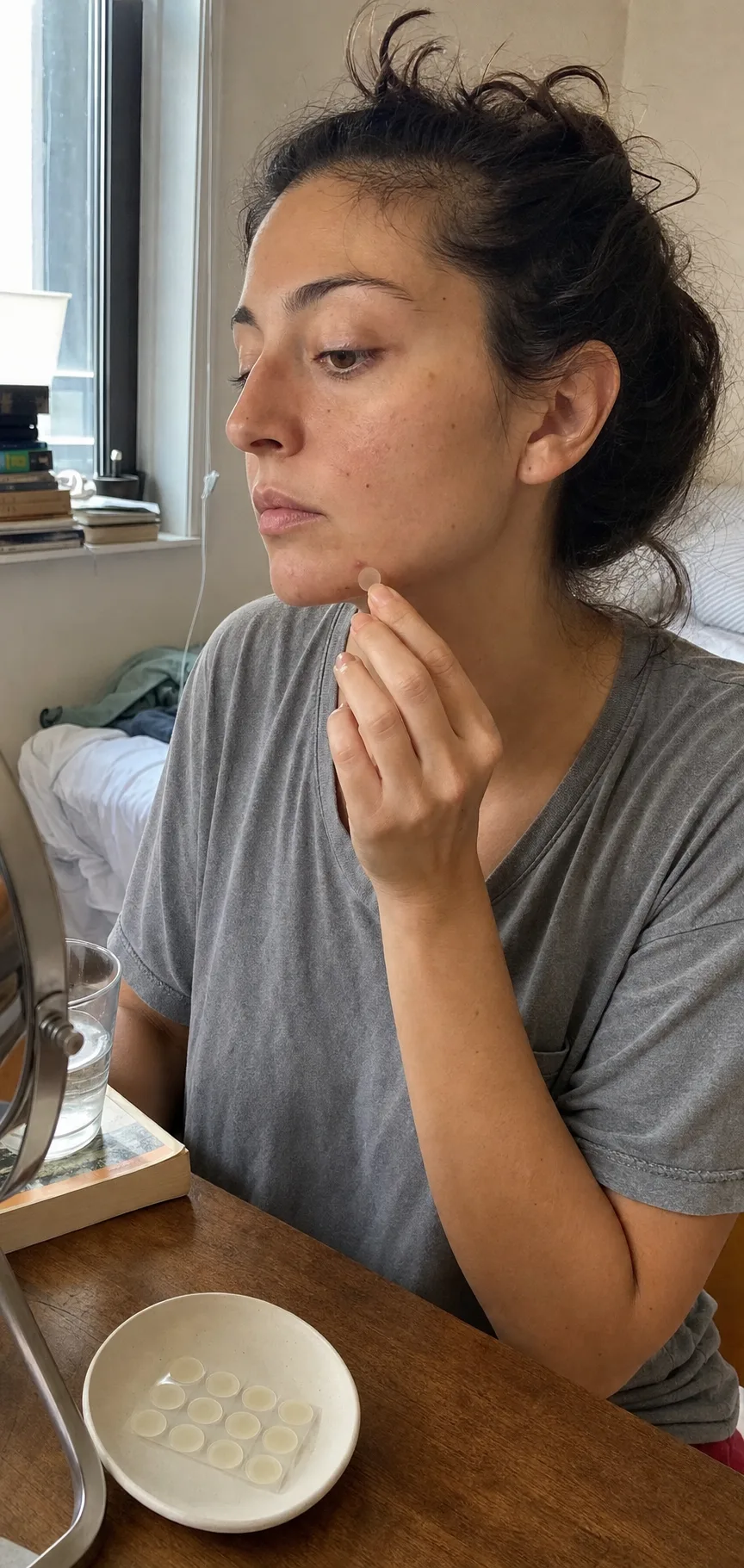
Apply the patch after a gentle cleanse, once the skin is completely dry. Cream, face oil, and dampness soften the adhesive, which is how a patch meant for overnight ends up folded into your pillowcase by midnight. Choose a dot that extends beyond the edges of the blemish, press it down with clean hands, then continue the rest of your routine around it.
Plain hydrocolloid and medicated patches aren’t interchangeable. Some dots add salicylic acid or other ingredients, and those deserve the same label-reading you’d give any leave-on treatment. The FDA recognizes salicylic acid and benzoyl peroxide as over-the-counter acne actives within specific concentrations. More actives in one evening can also mean more irritation, especially if you already use a retinoid or exfoliating acid.
Leave the tiny dome alone
Wear time belongs to the package directions, but the visual cue is charmingly obvious: many plain patches swell or turn milky after taking up fluid. Peel one off slowly rather than snapping it away. If the spot is still weeping and the surrounding skin feels calm, wash gently, let it dry, and use a fresh patch. Reusing the same dot is both grim and pointless.
The real luxury is forgetting it’s there. You can answer email, cook dinner, or go to sleep without checking the spot every twelve minutes. If the patch stings, burns, or leaves an angry adhesive-shaped ring, remove it. Skin that reacts to bandages can react here too, and a decorative star is never important enough to argue with a rash.
Your fingers are the bigger story
The American Academy of Dermatology is blunt about picking: squeezing can push material deeper, increase inflammation, delay clearing, and raise the chance of scars or dark marks. A patch creates a small physical pause between impulse and skin. For anyone who reaches for a bump while reading or thinking, that barrier may be the most convincing reason to wear one.
Recurring acne needs consistency rather than nightly improvisation. Gentle cleansing, one appropriate treatment used long enough to work, moisturizer, and daily sunscreen make a steadier foundation. See a dermatologist for deep painful nodules, scarring, or breakouts that aren’t improving. The patch can handle tonight’s tempting whitehead. It doesn’t have to carry your entire complexion.