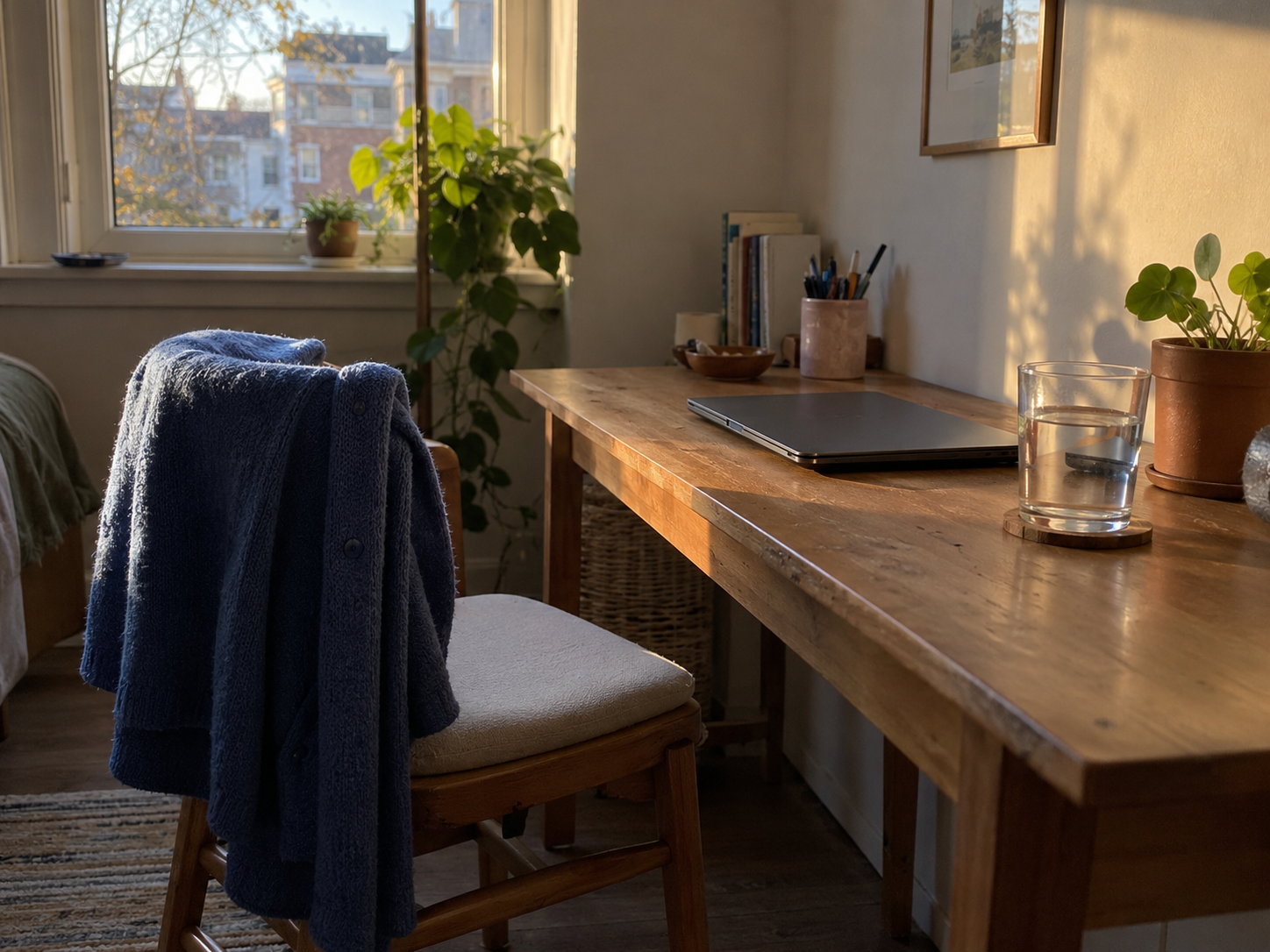
You've closed the laptop, but your shoulders are still up by your earrings. Before you carry that pose into dinner, give yourself a quiet moment in the chair.
Early November evenings invite all sorts of ambitious rituals. I like one that doesn't require a purchase or a fresh pair of leggings. Progressive muscle relaxation means gently tightening a muscle group, then releasing it and noticing the difference. There's something pleasingly concrete about having a sensation to pay attention to.
The release deserves your attention
Think of the squeeze as a brief introduction. The interesting part comes afterwards, when you let go. The VA's Whole Health guidance describes this contrast as a way to learn what muscular tension and relaxation feel like. You aren't aiming for the strongest contraction you can manage. A little tension is enough.
An ordinary chair is a lovely place to begin. Let the back support you, put your feet down and loosen anything that digs in. Leave the phone out of your hands. You can keep your eyes open if that's more comfortable; there's no particular expression you need to wear.
Start with the hands that did the typing
For a small first taste, gently close your hands into loose fists. Hold for about five seconds while breathing comfortably, then let your fingers open. Pause and notice how your palms feel. The VA recommends moving through muscle groups in order; a full practice takes roughly 10 to 15 minutes.
If your shoulders are comfortable and uninjured, try a small, gentle shrug next, then let them settle. Keep breathing throughout. Skip any area that hurts, cramps or feels uncomfortable. This short seated experiment is an introduction, so you can leave the longer guided session for an evening when you want it.
A quiet moment doesn't need a score
You might prefer to do this before dinner, still in your work clothes, while the room has a little daylight left. I wouldn't add a streak counter. If you enjoy the contrast between holding and releasing, come back to it. If you spend the whole time wondering whether you're relaxed enough, let the question go unanswered.
Keep the promises modest, too. NCCIH says relaxation techniques alone aren't especially promising as a treatment for sleep problems, and identifies cognitive behavioral therapy for insomnia as the recommended first treatment for chronic insomnia. A pleasant pause can earn its place in your evening without being sold as a cure for a sleepless night.
You can stop before the ritual gets elaborate
If focusing inward makes you more anxious or uncomfortable, stop. NCCIH notes that some people have that experience with relaxation practices. Persistent anxiety, ongoing pain or lasting sleep trouble deserves a conversation with a healthcare professional. You don't have to keep repeating an exercise that feels wrong for you.
Then get on with the evening you had in mind. Put the rice on, call your sister, find the cardigan you left on the chair. I like the idea of a small pause that ends cleanly, with no app to close and no new collection of things on the bedside table. Your laptop has already had enough of your attention today.