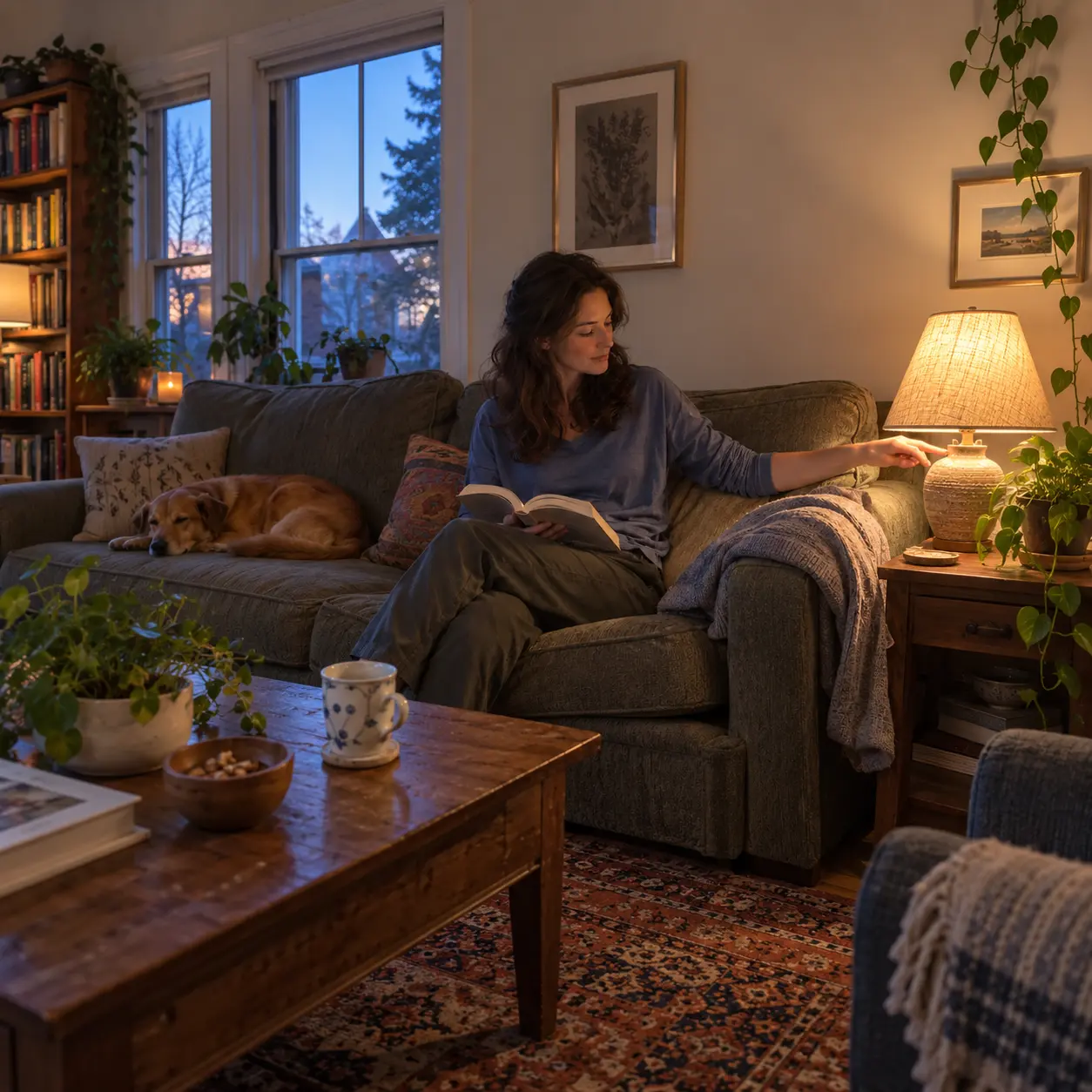
By October, a lamp-lit corner feels especially inviting. Give yourself enough light to read, leave the ceiling fixture off, and let the last hour of your evening feel a little quieter.
You don't need a bedroom makeover to try this. Start in the room where you actually spend that hour, even if there's laundry on the sofa. Softer light is a lovely change of atmosphere, and there's a sound reason to pay attention to brightness before bed. Keep your expectations modest: a prettier pool of light won't solve every restless night.
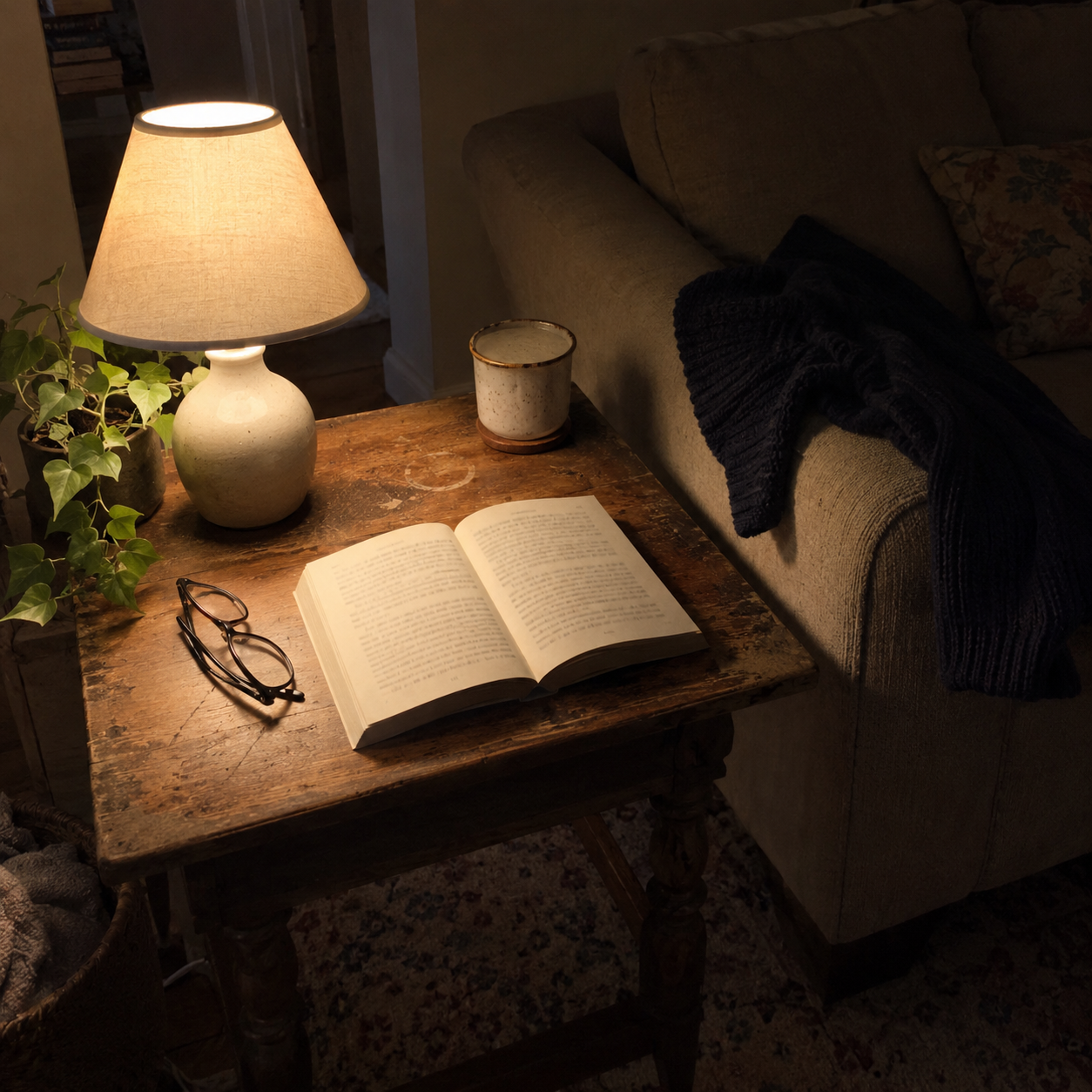
Your eyes are still taking in the evening
Light helps set your body's daily rhythm. The National Heart, Lung, and Blood Institute explains that bright artificial light late in the evening can interfere with the release of melatonin, the hormone involved in preparing for sleep. A television or smartphone can be part of that exposure. The room around the screen deserves your attention too.
That doesn't mean every illuminated evening is a mistake. You still need to see your book, find the slippers, and move safely through the house. The aim is to ease off the brightness as bedtime approaches. Think about the lamp beside your chair before you start shopping for another sleep accessory. You might already have what you need.
Let one corner have the glow
Choose the seat you gravitate toward after dinner. A shaded lamp beside it lets you keep reading without lighting the whole room as though you're hunting for a lost earring. Angle the light toward the page and away from your eyes. Keep enough illumination along the path to the bathroom; stumbling through darkness has no charm.
I like a small, warm-looking pool of light here. That's a decorating preference, rather than a promise that a particular bulb will make you sleep. Try the lamps you own before buying anything. If the room still feels glaring, switch off an extra fixture. If you're squinting at the page, bring the reading light closer or adjust it. Comfort gets a vote.
The phone needs a quieter evening too
NHLBI recommends using the hour before bed for quiet time and avoiding bright artificial light from screens. Give that suggestion a place in your evening: finish the messages you need to send, then put the phone somewhere you won't keep reaching for it. A paperback is an appealing replacement if scrolling tends to swallow the whole hour.
You don't have to turn this into an immaculate ritual. Some evenings involve a late call or a film you want to finish. Come back to the habit the next night. Keep roughly consistent bed and wake times as well; dimming the room doesn't make a shrinking sleep window generous. Leave yourself time to sleep, whatever the lighting looks like.
A lovely lamp has its limits
Judge the change by whether your evening feels comfortable and easy to repeat. There's no need to award yourself a score for getting sleepy on cue. If you share the room with someone who needs brighter light, choose a different corner or spend that last stretch elsewhere. A small accommodation is easier to live with than an argument over the ceiling switch.
If trouble falling or staying asleep keeps returning, bring it to a healthcare professional. NHLBI describes cognitive behavioral therapy for insomnia, or CBT-I, as a usual first treatment for long-term insomnia. Softer lighting belongs among everyday sleep habits; persistent insomnia deserves care beyond decorating advice. For tonight, a comfortable chair and a readable page are a perfectly good place to begin.