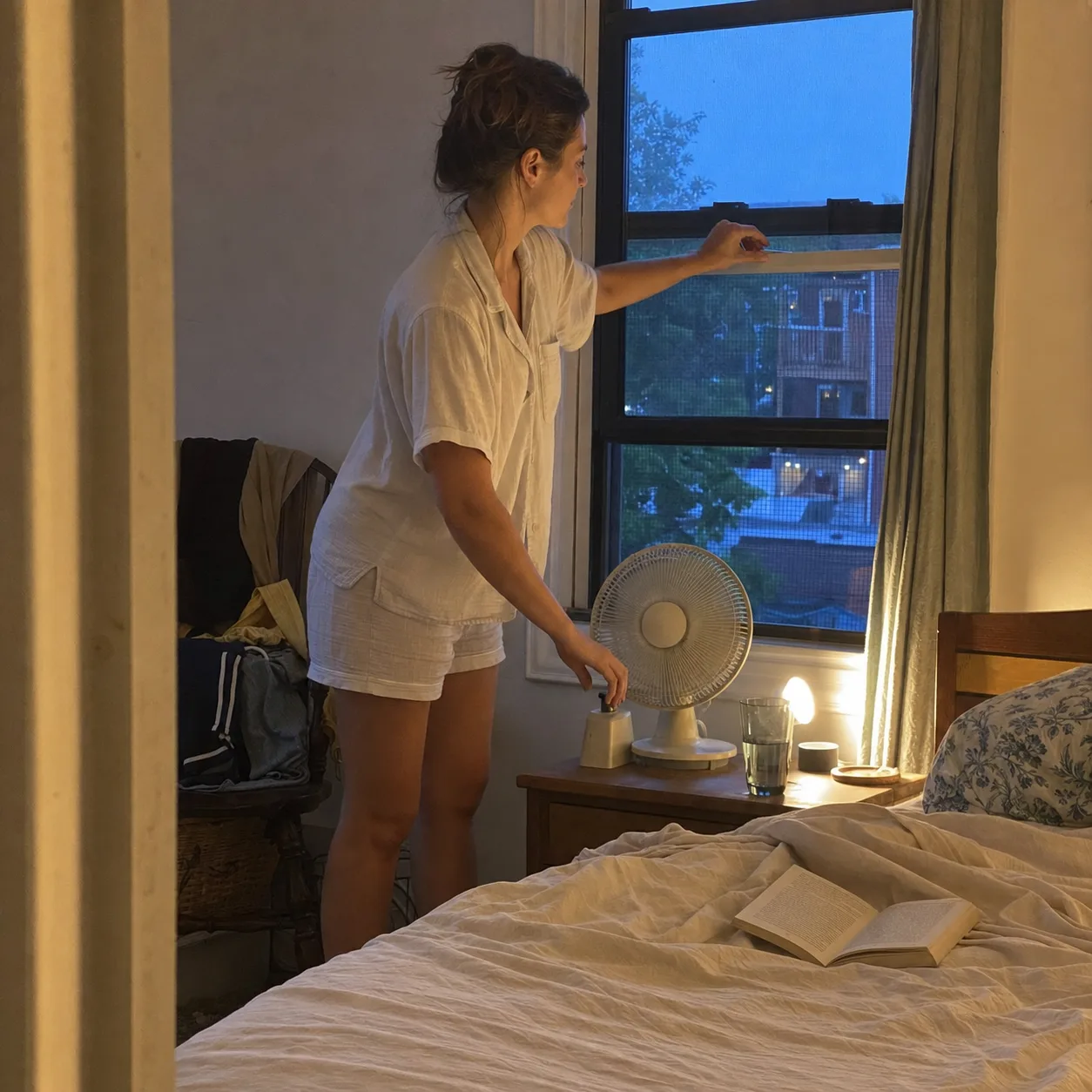
There’s a particular kind of summer insomnia that starts the moment your calf finds the one warm patch of sheet. You flip the pillow, kick away the duvet, turn the fan up and wonder how a room can still be storing three o’clock in the afternoon.
Your bedtime routine can’t cool a bedroom that spent all day collecting sun. The clever move is to start earlier, then change tactics as soon as the air outside becomes cooler than the air in.
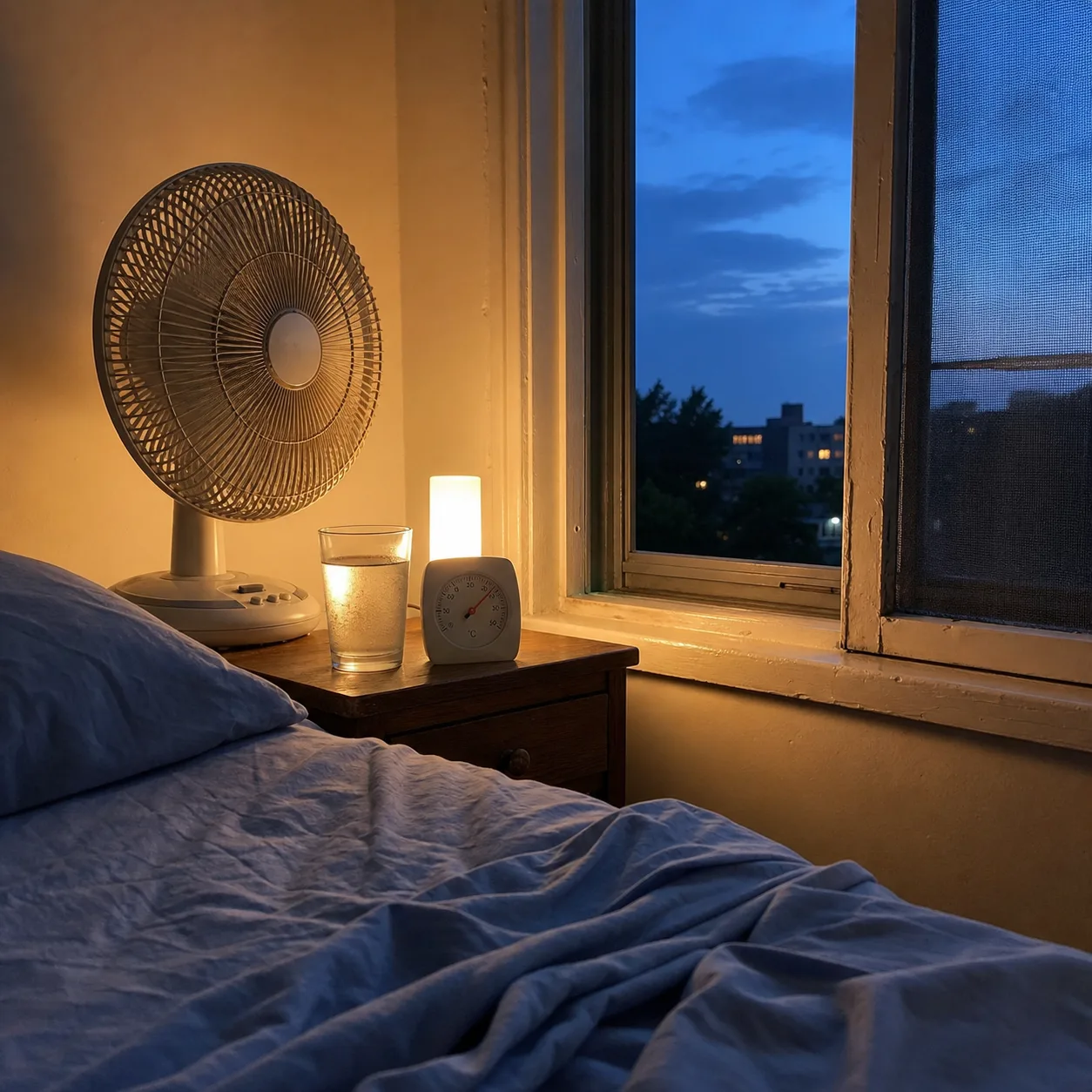
Cool the room before you need to sleep
Hot bedrooms really do interfere with rest. In a small Los Angeles study that tracked 409 nights, a 5°C rise in indoor nighttime temperature was linked with 23 fewer minutes of sleep and a longer wait to drift off. It’s an observational study of 19 people, so it doesn’t hand us a universal perfect temperature. It does make one point beautifully clear: the air around your bed matters.
Begin with the windows that catch the hardest sun. Close their shades during the hot part of the day, and keep the windows shut while the outdoor air is warmer than the room. The Environmental Protection Agency recommends reversing that once it’s cooler outside. Open the shades and windows, then let the evening air carry away some of what the walls and bedding have held.
Make the fan move heat out
A fan beside your face feels lovely, but it doesn’t lower the temperature of the air. Give it a more ambitious role at the start of the evening. Position it near an open window to push hot air out or draw cooler air in, depending on which direction gives you the stronger cross-breeze. Leave the bedroom door open if the rest of the home is cooler and privacy allows.
Once the room has eased down, turn the fan toward the bed and keep the speed comfortable. If outside air is smoky or polluted, keep the window closed and use filtered air conditioning or an air cleaner instead. Check your local air-quality reading rather than trusting a sky that happens to look clear.
Strip the bed back to what feels good
This is the night for one breathable layer, loosely arranged. A cotton or linen sheet lets you cover the parts that want covering without building a warm little tent around the rest of you. Put the decorative blanket on the chair. It’ll survive the rejection.
Keep a glass of water by the bed, dim the lights, and take a cool or lukewarm shower if you’re still flushed from the day. Skip the ice packs directly on bare skin and the freezing shower that leaves you shivering. You’re aiming for comfortable, repeatable relief, not a midnight dare.
Know when a fan has reached its limit
There’s an important line between a sticky night and dangerous indoor heat. The Centers for Disease Control and Prevention says fans should only be used when indoor temperatures are below 90°F; above that, moving very hot air can raise body temperature. Air conditioning or a cooler public place is the safer answer, especially for older adults, pregnant people, children, and anyone with a chronic health condition.
Treat confusion, fainting, or very hot skin as an emergency and call for medical help. On an ordinary warm night, though, the plan is pleasingly low drama: block the afternoon sun, wait for the temperature outdoors to fall, open the room to cooler air, and only then climb into bed. The cold side of the pillow might even stay cold.