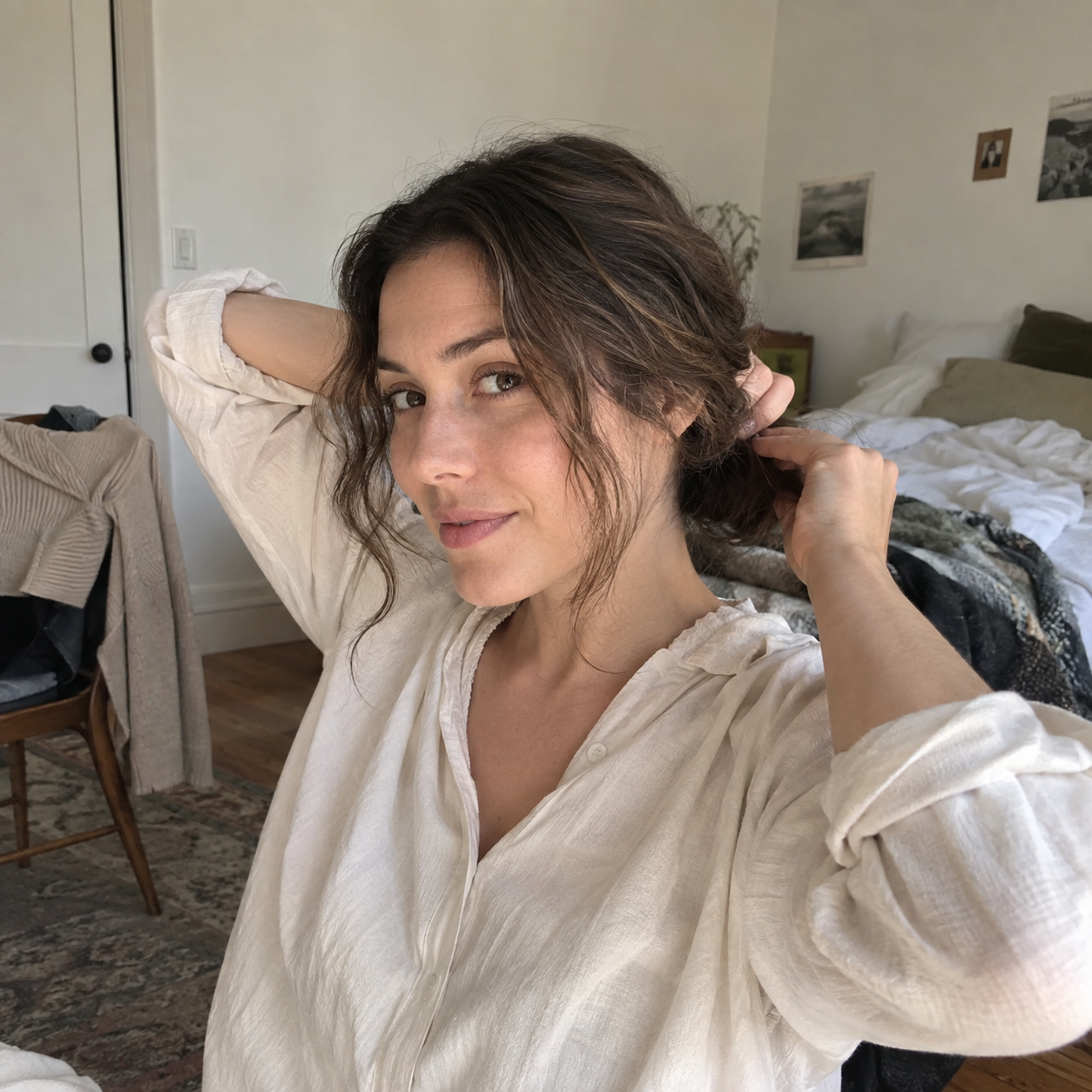
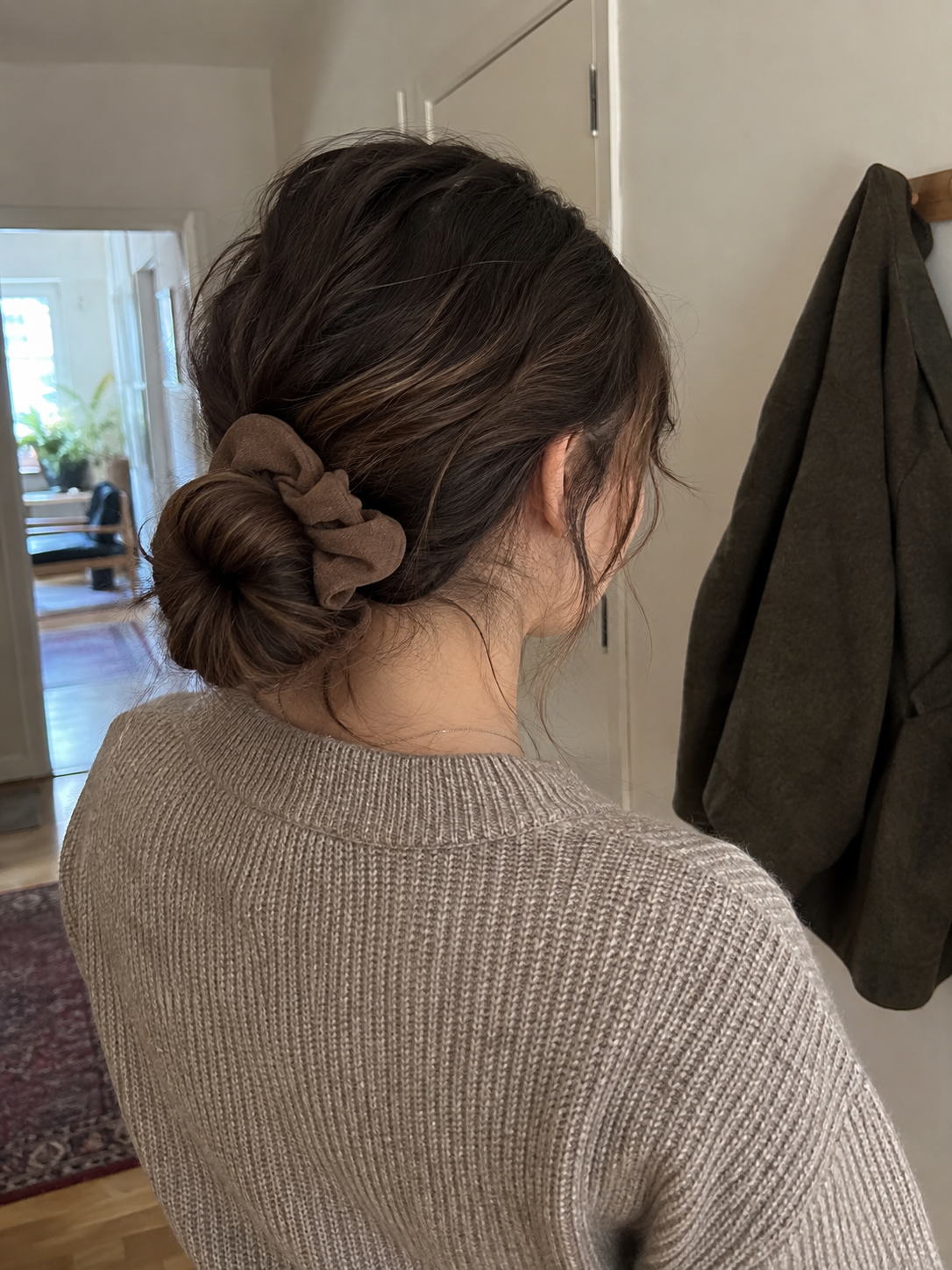
Your weekday bun deserves a little breathing room. With a shirt collar turned up and a few strands escaping around your ears, a loose knot at the nape looks wonderfully put together without demanding another ten minutes at the mirror.
As September fills the calendar again, it's tempting to pull everything back and forget about it until dinner. Pay attention to how that hairstyle feels before you leave. A bun that hurts needs loosening, however good it looks from the front.
The neatest hair isn't always the nicest
There's something appealing about hair you can still see moving. For this version, let your natural texture show across the crown and keep the shape low and easy. A wisp beside your cheek softens the whole arrangement; a small loop escaping the knot gives it character. You can stop before every hair lies flat.
Gather the lengths gently where they comfortably meet at your nape, then make a loose twist and secure it. If shorter pieces won't reach, leave them out. Don't pull harder to recruit them. The finished shape should suit the hair you've got today, including the layers your last haircut left around your face.
Your scalp gets a say
The American Academy of Dermatology warns that repeatedly wearing styles that pull can cause traction alopecia, a type of hair loss. Tight buns and ponytails are among them. Pain or stinging is a reason to change the style immediately, rather than waiting for it to settle during your commute.
Before reaching for your bag, notice whether the hair at your temples feels tugged. Undo the bun and start more loosely if it does. A lower position alone doesn't guarantee gentle styling: you can pull a low bun tight, too. The point is to release the tension, wherever you prefer the knot to sit.
A pretty scrunchie still needs a light hand
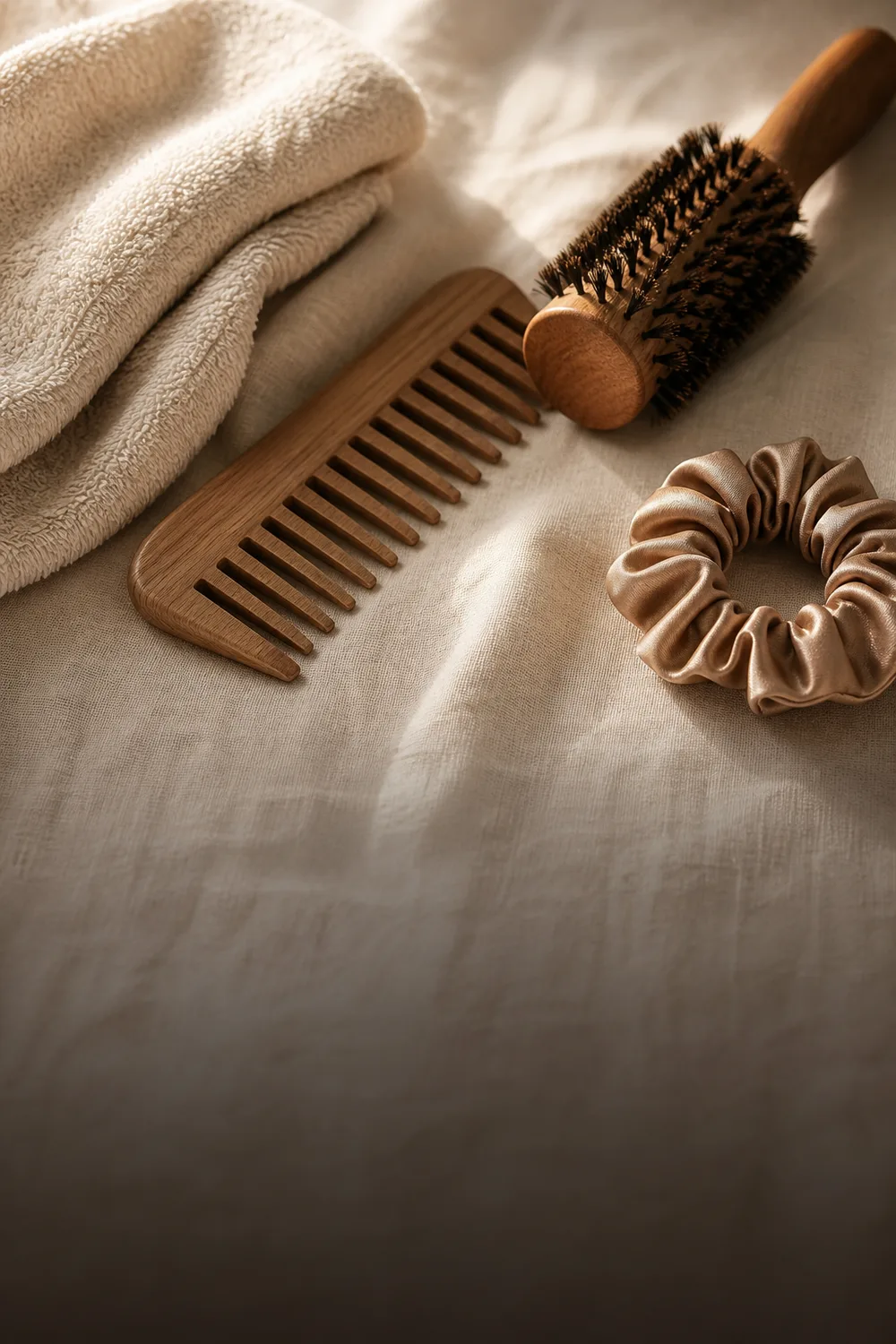
A plain fabric scrunchie looks especially good against a crisp collar. Choose a shade close to your hair for a quiet finish, or a deep burgundy if you want the tie to show. Treat it as part of the look. There's no need to disguise it under an elaborate wrap of hair.
Even a soft-looking accessory can hold an over-tightened style. Skip that final turn if it means hauling the hair back harder. If the bun keeps slipping, try a loose ponytail instead of insisting on the knot. And vary your hairstyles across the week; the AAD recommends giving hair regular breaks from styles that pull.
A changing hairline deserves attention
Broken hairs around your forehead, a receding hairline or patches where the hair is pulled are reasons to book a dermatologist appointment. They aren't proof that your bun is the cause. Hair loss has several possible explanations, and a dermatologist can work out what's happening instead of leaving you to guess in the bathroom mirror.
The British Association of Dermatologists explains that early traction alopecia can improve once the pulling stops, while prolonged tension can permanently damage follicles. Don't wait for an obvious bare patch before changing an uncomfortable habit. Tomorrow's hair can be loosely tied, worn down or arranged differently. That soft little bun will still be there when it feels comfortable.