Hair perfume has slipped out of the fancy-accessory corner and into the part of beauty where trends start to feel normal almost overnight. This year has brought a steady run of hair mists and body-and-hair launches, which makes sense in October: they feel lighter than perfume, prettier than dry shampoo, and very good at leaving a soft little trail on scarves, collars, and cool-weather knitwear.
There is a sensible way to enjoy the trend. You do not need to treat hair mist like scalp care, and you definitely do not need to hose down your roots to make it count. If your scalp is calm, you have some room to play. If it is the sort that objects to new products, the elegant move is simpler: scent the lengths, leave the scalp alone, and let the fragrance arrive a half-second later.
Why it suddenly feels everywhere
Hair fragrance has real 2026 momentum behind it. Vogue reported in April that Orebella was expanding into body and hair parfum mists, and Allure has already framed the category as a full hair-fragrance wardrobe, complete with formulas designed to be layered through the day. That is a very particular beauty signal. Once scent brands start giving hair its own format, you are no longer looking at a niche extra.
The appeal is easy to understand. Hair moves, catches air, and holds onto scent beautifully, so a mist can feel softer and more intimate than a wrist sprayed with eau de parfum. Some formulas also add conditioning ingredients, which is pleasant, though it is wise to keep your expectations tidy. A hair perfume can leave your lengths smelling expensive. It is not there to repair damage or sort out a temperamental scalp.
Your scalp is allowed to be fussy
Dermatologists are very clear that an itchy scalp can come from reactions to products that touch it, and the American Academy of Dermatology also notes that fragrance is one of the most common causes of contact dermatitis. That matters here because a trendy product does not stop being a fragranced product just because the bottle is chic and the mist is fine enough to feel invisible.
The research on scalp allergy is hardly imaginary. A systematic review of scalp-applied products found that hair dyes, shampoos, and conditioners were common culprits in scalp allergic contact dermatitis, and fragrance mix was among the most frequently identified allergens. That does not mean everyone should fear a hair mist. It means the scalp is a poor place to experiment if you already know yours burns, itches, or goes flaky when fragrance enters the chat.
- Spray from a little distance onto mid-lengths and ends.
- If a product leaves your scalp itchy, burning, or rashy, stop using it.
- If you are very reactive, keep your wash-day staples fragrance-free and let scent live elsewhere.
Wear it like a finishing touch
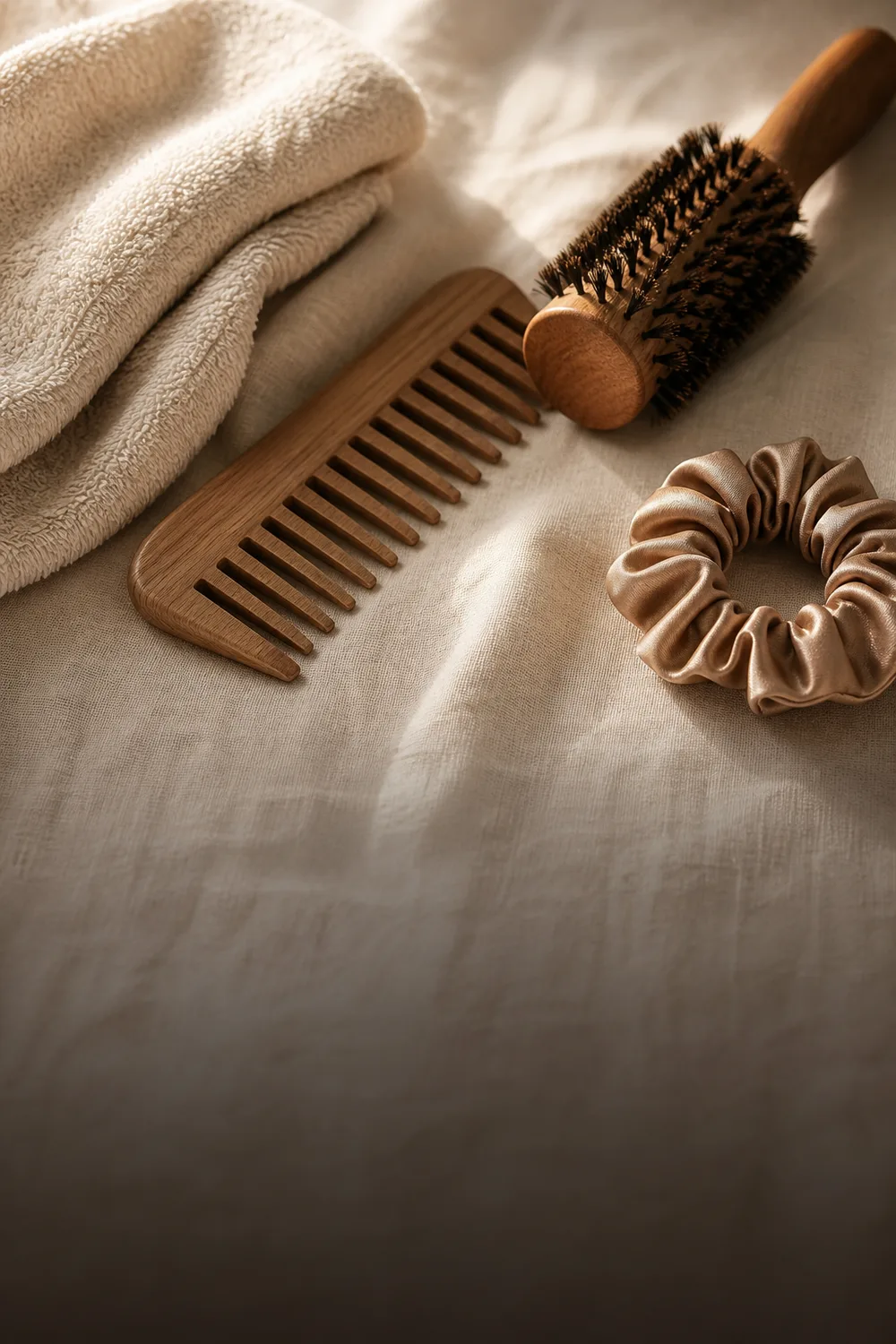
The nicest way to use hair perfume is the least dramatic one. Mist lightly over the lengths, or spray your brush and pull it through once if you want even softer diffusion. Save the roots for the products that actually need to perform there, like your shampoo, scalp treatment, or whatever your dermatologist has approved. Hair perfume should sit in the same category as lipstick before dinner or a last coat-buttoning glance in the mirror: finishing touch, done.
That is also why this trend works so well right now. Fall beauty gets better when it stops shouting. A good hair mist gives you that close-range charm without turning your head into a cloud of competing notes. Keep the scent on the hair you want to move, skip the skin that likes to complain, and you get the whole point of the trend with far less chance of a very annoying scalp.