Every October, somebody decides her shower drain is delivering terrible personal news. This year the panic has company: scalp serums are everywhere, dressed in serious bottles and even more serious promises.
Some of that concern is fair. A little more hair on your brush can feel unnerving, especially when autumn is already asking your skin, sleep, and energy to adjust. Still, this is a good month to get quieter about your hair. More careful. Less impressed by miracle language.
Why October always feels louder
A trichologist speaking to Bustle said clients start turning up around September and October, suddenly convinced something has gone very wrong because they're seeing more strands in the shower, on the pillow, and in the brush. That's exactly why the season feels so dramatic online right now. The timing makes ordinary shedding look personal and urgent.
The American Academy of Dermatology draws a helpful line here. Extra shedding can follow stress on the body or mind, including illness, surgery, childbirth, or a hard stretch of life, and when that stress eases, many people see fullness return over the next six to nine months. That doesn't make every October brushful thrilling. It does mean you don't need to treat the first alarming week like a verdict.
Handle it like hair that wants less from you
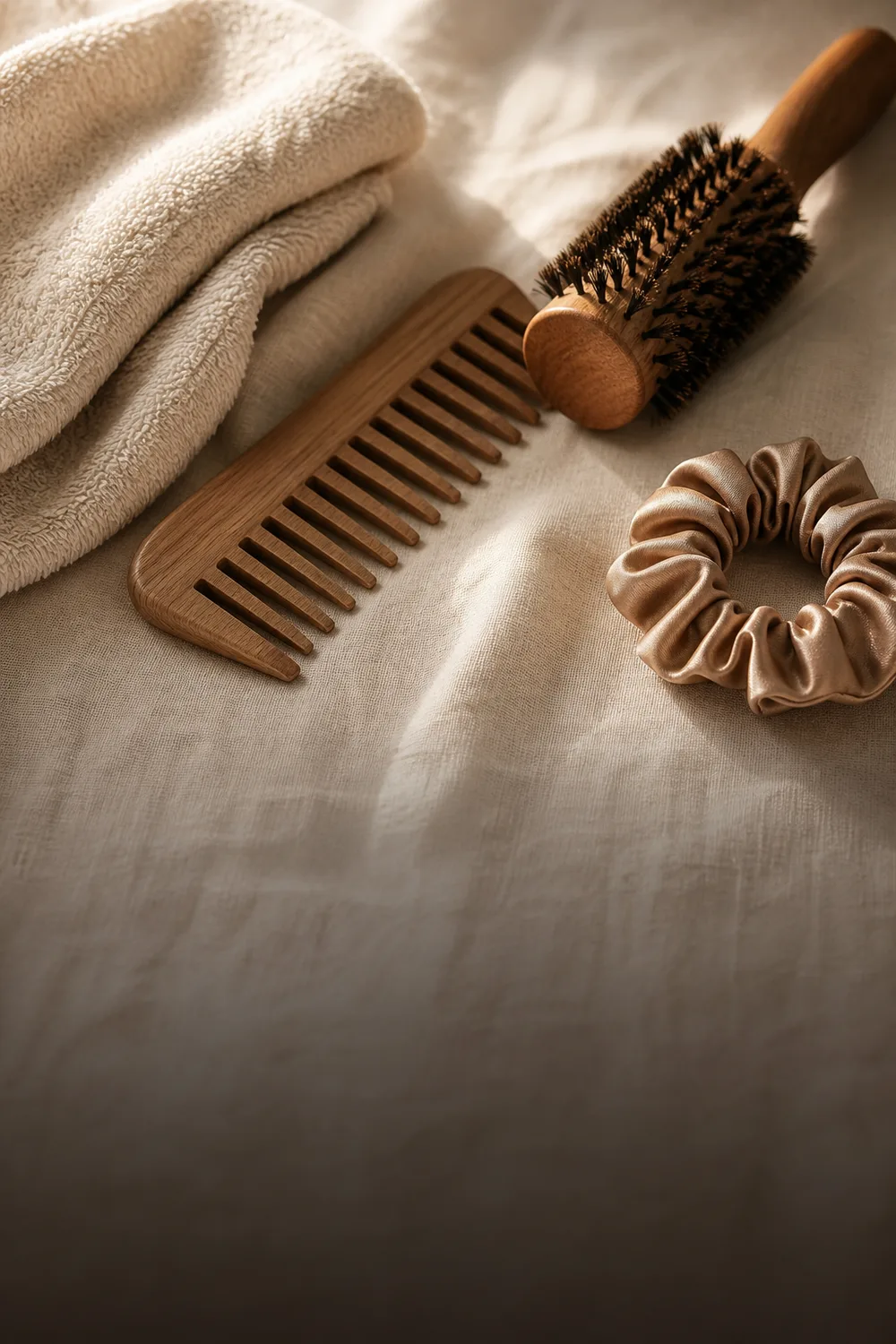
When hair is already shedding, roughness reads louder. AAD guidance is plain about it: wet hair breaks more easily, heavy brushing does damage, and high heat adds more strain than shine. October is a good month to let your hair stay a little softer around the edges. Towel it gently. Let it air-dry partway. Save the extra pass with the hot tool for the day you actually want it.
The same goes for tension. Dermatologists warn that repeatedly wearing braids, extensions, slick ponytails, or tight buns can keep pulling at the hair until breakage and even permanent loss set in. If your roots feel sore by lunchtime, your style is asking too much. Trade the severe finish for a loose low bun, a clip, or a braid with some give in it. Your hairline doesn't need discipline right now.
Know when a serum is only being a cosmetic
This is where the current scalp-serum boom needs a little editing. The FDA says products sold to cleanse or beautify are cosmetics, while claims to restore hair growth or affect how the body functions make a product a drug. So a serum can make your scalp feel comfortable, your lengths smoother, and your part look neater. Those are real pleasures. They are not the same promise as regrowth.
If you want a treatment with a clearer lane, AAD says minoxidil can help early hair loss and help prevent further loss, but it takes patience. Results typically take six to twelve months, and it won't regrow an entire head of hair. That's a useful brake on panic shopping. One tidy amber bottle may be lovely on the shelf. It still has to tell the truth.
A part line deserves honesty
If what you're seeing is a widening part, a bald spot, obvious thinning, or shedding that keeps going, a dermatologist is more valuable than another cart full of scalp care. AAD notes that getting the cause right matters because hair loss has many triggers, and treatment only gets sharper once someone has looked closely at your scalp and history.
There is relief in letting this be specific. Sometimes the answer is time and gentler handling. Sometimes it is treatment. The calmer move is the same either way: stop asking one bottle to solve every version of hair loss, and give your scalp a clearer question.
- Book the appointment if your part is widening or a bald spot is showing.
- Go sooner if a hairstyle hurts or your scalp feels tender from tension.
- Keep your expectations long on any true regrowth treatment. Hair usually moves more slowly than the bottle copy does.